Covering Lancashire
This week's special offer Block Paving 20% off Call now on 01772 978 541 Contact us Limited-time pricing for selected Lancashire bookings.
Based in Bamber Bridge, working across Lancashire

Fencing across Lancashire

Garden fencing, privacy fencing, and boundary fencing for homes across Lancashire. Every job starts with a free site survey covering levels, drainage and access, followed by a written quote.

Call 01772 978 541 info@allpave.co.uk Coverage across Lancashire, not just Preston

Request your quote

Tell us where the property is and what you would like done. We usually reply to enquiries within 24 hours.

Required so we can confirm the job is in our UK service area.

Add photos or budget (optional)
No files selected

Upload up to 5 driveway, patio, garden, or plan files. Images and PDF plans only.

We use your details only to reply to this enquiry and prepare your quote. See our privacy policy for how long we keep them and your rights.

Customer reviews from Google

Read all our reviews on Google
  • We hired this company to extend our driveway and put new fencing up in the back garden. The company clearly hires skilled professionals with a strong work ethic. Thank you to the team.

    Dee 14 Jul 2024 Review on Google

  • ALLPAVE arrived and in 3 days I had a level lawn and a new extended patio. The new fence and top quality lawn look beautiful. Thank you John and all the lads.

    Tom Beck 11 Sep 2023 Review on Google

  • The All Pave team have been outstanding. The team worked tirelessly from start to finish and laid a beautiful patio, walkway, turf and fencing. I would recommend these guys to anyone.

    Maxine Parker 28 May 2023 Review on Google

Fencing explained

Garden and boundary fencing across Lancashire

A good fence gives privacy, keeps children and pets safe, marks the boundary and finishes the look of a garden. A poor one leans, rots at the base and blows over in the first strong wind. The difference is almost always in the posts and how they are set.

All Pave installs garden fencing, boundary fencing, privacy screening and gates from our base in Bamber Bridge, across Lancashire and in Southport and Formby.

Types of fence

  • Panel fencing. Ready made panels fitted between posts. Lap panels are the most economical, while tongue and groove and heavier closeboard style panels are stronger and more private.
  • Closeboard fencing. Vertical featheredge boards nailed to horizontal rails between posts, built in place. It is strong, suits sloping ground and individual boards can be replaced.
  • Slatted and contemporary fencing. Horizontal slats with small gaps, popular for modern gardens and for screening seating areas.
  • Picket and low fencing. Used for front gardens, where lower boundaries are the norm.

Posts, gravel boards and what makes a fence last

Posts carry the whole fence. In an exposed garden, a panel acts like a sail, so the posts need to be strong and set deep enough to resist the wind.

  • Concrete posts do not rot and are a common choice for panel fencing, especially in exposed or wet gardens.
  • Timber posts should be pressure treated for use in the ground. They suit closeboard and slatted designs and some people prefer the look.
  • Setting depth. As a rule of thumb, around a quarter of the post length goes below ground, set in concrete.
  • Gravel boards run along the bottom of the fence so the panels or boards sit clear of the soil. They stop the timber wicking up moisture and are much cheaper to replace than a rotten panel.

Boundaries and planning

Before any work starts, the boundary line needs to be clear. If it is shared with a neighbour, it is worth talking to them first, and your property deeds may show which side is responsible for the fence.

In most gardens in England, a fence up to 2 metres high can be put up without planning permission. Next to a road used by vehicles, or a footpath beside such a road, the limit is usually 1 metre. Different rules can apply to listed buildings and some conservation areas, so check with your council if that applies to you.

Slopes, gates and awkward sites

On sloping ground, panel fences are stepped down the slope, while closeboard can follow the ground more closely. Gates need strong posts and good hinges, and should be hung so they swing freely and close properly. Tree roots, old concrete and rubble where the posts need to go all affect how the job is planned.

Typical uses

  • replacing an old or storm damaged boundary
  • adding privacy to a garden that is overlooked
  • securing a garden for children and pets
  • side gates and secure side access
  • screening bins, seating areas or parts of the garden
  • finishing the boundary as part of a wider landscaping project

Looking after a fence

  • Keep soil, leaves and plants clear of the bottom of the fence.
  • Treat or stain timber every few years to protect it from the weather.
  • Check posts after storms and fix any movement early.
  • Avoid letting climbing plants grow heavy on the panels, as they add weight and hold moisture.

How All Pave works

Every fencing job starts with a free site survey. We measure the run, check the ground, the slope and the exposure, and talk through fence styles, post types and gates. The written quote sets out the removal of the old fence, the posts, gravel boards, panels or boards, gates and waste removal. For early guidance, send us a few photos, a rough length and your postcode. We are based in Bamber Bridge and cover Lancashire, including Southport and Formby.

What a good fencing job needs

The finish you see sits on work you do not. These are the parts of a fencing job that decide how well it drains, how it wears and how long it lasts.

All Pave new timber garden fencing beside a grey porcelain patio

Fencing overview

All Pave installs fencing that improves privacy, security, and the overall finish of the property, whether it is a standalone job or part of a wider landscaping scheme.

All Pave concrete post garden fencing around a lawn

The groundwork that matters

  • Posts set in concrete at a depth that suits the height of the fence.
  • Gravel boards so timber panels are not sitting on damp ground.
  • The line and level of the boundary agreed before work starts.
  • Panels or boards chosen for the privacy and wind exposure of the garden.
All Pave boundary fencing beside grey patio paving

How a fencing job runs

We visit the property to measure up and check levels, drainage and access. You then get a written quote setting out the work, and once you are happy we agree a start date with you.

All Pave timber garden fencing with concrete posts and gravel boards, quote scope and materials

What we can include in the quote

New installs, replacements, adjoining paths or patios, edging, steps and the areas where one surface meets another can all be priced together in one written quote.

What makes fencing last

Most fencing problems come back to three things. How firmly the posts are set, whether the timber is kept off wet ground, and how carefully the line and fixings are finished.

Posts Post depth, concrete and spacing decide whether the fence stays upright in strong wind.
Ground Gravel boards and good drainage at the base keep timber panels clear of standing water.
Detail A straight line, even heights, secure fixings and a tidy handover are what make the finished job look right.

Fencing questions from Lancashire homeowners

What is included in a proper garden fencing installation?
A proper Fencing project starts with confirming the boundary line, removing failed sections, setting sound posts at suitable centres and installing panels, boards, rails or gates square and secure. The visible finish then uses timber or concrete posts, gravel boards, panel or board style, height, capping, gates and transitions at corners, with the edges, transitions and final clean-down included in the written scope.
What preparation matters most for garden fencing?
The important preparation is confirming the boundary line, removing failed sections, setting sound posts at suitable centres and installing panels, boards, rails or gates square and secure. All Pave checks those details before agreeing the installation route because the work underneath has a direct effect on the finished result.
How do you decide whether garden fencing suits a property?
We look at boundary position, ground conditions, exposure, level changes, access, privacy needs, nearby planting and gate positions. We then compare the finish, upkeep and day-to-day use with the alternatives instead of assuming one material or layout is right for every property.
Are concrete posts and gravel boards worth considering for garden fencing?
They can be a strong option where durability and keeping timber panels clear of the ground are priorities. The right choice still depends on appearance, access, ground conditions and how exposed the boundary is.
How long does a typical garden fencing project take?
The programme depends on run length, removal, post holes, hard ground, level changes, access, gates and weather. We confirm the likely sequence after seeing the site, so excavation, preparation, installation and curing or settling time are not squeezed into a generic promise.
Can you include gates in the fencing quote?
Yes. Side gates, garden access points, and tied-in gate openings can all be included where needed.
Why choose All Pave for fencing?
Because we price clearly, install straight and tidy runs, and treat fencing like part of the finished look of the property rather than just a basic boundary line.
Can All Pave help choose the right garden fencing finish?
Yes. We can compare timber or concrete posts, gravel boards, panel or board style, height, capping, gates and transitions at corners against the house style, adjoining paths or boundaries, drainage, traffic and budget before the final quote is prepared.
Clear Process, Proper Finish

What working with All Pave on fencing looks like

If you are looking at fencing, the usual next step is a quick survey, practical advice on finish and layout, and a straight answer on price, timing, and the right route for the property.

01

Free Survey

We look at the space, the access, the current condition, and what you want the finished result to achieve.

02

Quote & Advice

You get a clear recommendation on the right material, layout, and route, along with a written quote rather than guesswork.

03

Install Properly

Preparation, levels, drainage, edging, and finish are handled properly so the job is not just quick, but right.

04

Tidy Finish

You get a completed job that looks strong, feels properly finished, and improves how the property works day to day.

Typical Project Timeline

Smaller fencing and repair-led jobs can move quickly. Larger driveway, paving, patio, or multi-area exterior projects take longer once preparation, access, and finish detail are factored in properly.

  • A survey and clear brief helps the quote and schedule stay realistic.
  • Ground conditions, drainage work, and overall area size affect timing.
  • Good installations move efficiently, but not at the expense of preparation or finish quality.

Payment & Commercial Shape

Smaller jobs can often be handled simply, while larger projects are better split into sensible stages so the scope, progress, and payment structure stay clear.

  • You get a written quote before meaningful work starts.
  • If the scope changes materially, it gets discussed and priced clearly first.
  • Payment stages are kept straightforward and tied to visible progress where needed.
  • The aim is clarity, not surprise extras or vague moving targets.

Best Fit

  • Homeowners who want a stronger finished result rather than the cheapest quick fix.
  • Properties where layout, access, drainage, privacy, or finish detail genuinely matter.
  • People who want practical advice, a clear quote, and installation handled properly from start to finish.

Probably Not The Right Fit

  • If the only goal is the cheapest job, whatever the preparation.
  • If the plan is to cover over level or drainage problems rather than fix them.

Why The Process Works

  • Clear surveys, written quotations, and practical recommendations rather than vague promises.
  • 20+ years in exterior work and a long track record across Lancashire and surrounding areas.
  • Real property-focused advice on finish, layout, drainage, durability, and kerb appeal.
  • A straightforward route from first enquiry to completed job with no sales fog in the middle.

Fencing by town across Lancashire

There are 512 town and village pages for fencing below. Pick your town, or add your postcode to the quote form and we will confirm whether the job is in our area.

Main towns

Fencing pages by district

Blackburn with Darwen 11 towns
Blackpool 8 towns
Bolton 4 towns
Bradford 1 town
Burnley 8 towns
Bury 4 towns
Calderdale 1 town
Cheshire West and Chester 2 towns
Chorley 33 towns
Fylde 20 towns
Halton 1 town
Hyndburn 16 towns
Kirklees 2 towns
Knowsley 2 towns
Lancaster 43 towns
Leeds 1 town
Liverpool 4 towns
Manchester 3 towns
North Yorkshire 5 towns
Oldham 3 towns
Pendle 14 towns
Preston 20 towns
Ribble Valley 43 towns
Rochdale 3 towns
Rossendale 15 towns
Salford 2 towns
Sefton 12 towns
South Ribble 13 towns
St. Helens 4 towns
Tameside 3 towns
Warrington 1 town
West Lancashire 30 towns
Westmorland and Furness 19 towns
Wigan 8 towns
Wyre 27 towns
Other areas we cover 126 towns

Other All Pave services in Lancashire

Many jobs cover more than one surface. The driveway, patio, boundary and garden can be planned and priced together.
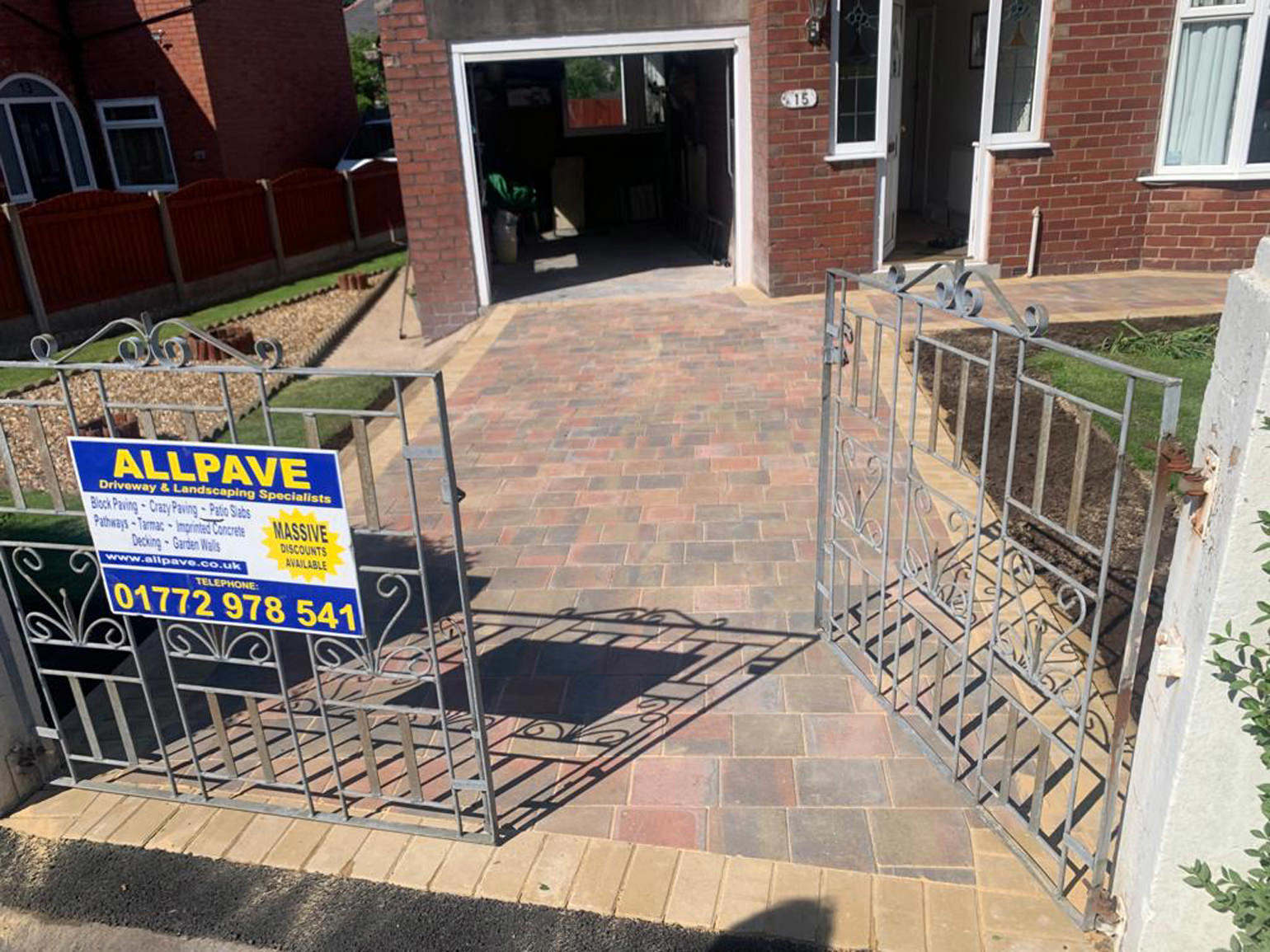
All Pave hard landscaping and garden paving

Landscaping

Hard landscaping, garden paving, paths, patios, fencing, and practical garden upgrades.

Talk to us about your fencing

Call, email or message on WhatsApp with your postcode, the rough size of the area and a few photos if you have them. That is the quickest way to get useful advice and arrange a survey.

WhatsApp